You need to know: Basic topology, homeomorphism, topological surface, orientable surface, genus of a surface, 
Background: A (two-dimensional, orientable) triangulation 


Let 
![\lambda\in(0,\lambda_c]](https://s0.wp.com/latex.php?latex=%5Clambda%5Cin%280%2C%5Clambda_c%5D&bg=ffffff&fg=000000&s=0&c=20201002)
![h\in (0,\frac{1}{4}]](https://s0.wp.com/latex.php?latex=h%5Cin+%280%2C%5Cfrac%7B1%7D%7B4%7D%5D&bg=ffffff&fg=000000&s=0&c=20201002)

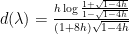



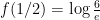
The Theorem: On 1st February 2019, Thomas Budzinski and Baptiste Louf submitted to arxiv a paper in which that proved that for any sequence 

![\lim_{n\to\infty}\frac{g_n}{n}=\theta \in [0,\frac{1}{2}]](https://s0.wp.com/latex.php?latex=%5Clim_%7Bn%5Cto%5Cinfty%7D%5Cfrac%7Bg_n%7D%7Bn%7D%3D%5Ctheta+%5Cin+%5B0%2C%5Cfrac%7B1%7D%7B2%7D%5D&bg=ffffff&fg=000000&s=0&c=20201002)

Short context: Triangulations are important in many applications, for example, as finite representations of a surface to a computer, or in the theory of random surfaces. In the last application, it is important to understand how a uniformly random triangulation looks like, and, for this, we need to count triangulations with various properties. In 1986, Bender and Canfield established the asymptotic growth of 

Links: Free arxiv version of the original paper is here, journal version is here.
 and a randomized algorithm that outputs a TSP tour with expected weight at most
  times the weight of the optimal tour. In fact, one can take
  .
. times the optimal one. Because the Christofides-Serdyukov algorithm has been unimproved for over 40 years, some people started to conjecture that the approximation ratio
  be an infinite group with finite generating set
  , and let
  be the smallest integer
  such that
  has representation
  with each
  . A symmetric finitely supported probability measure on
 ![\mu:G\to[0,1]](https://s0.wp.com/latex.php?latex=%5Cmu%3AG%5Cto%5B0%2C1%5D&bg=ffffff&fg=000000&s=0&c=20201002) such that set
such that set  is finite,
 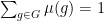 , and
, and  for all
  . Let
. Let  be a sequence of i.i.d. random variables with distribution
  , that is, such that
 ![{\mathbb P}[X_i=g]=\mu(g)](https://s0.wp.com/latex.php?latex=%7B%5Cmathbb+P%7D%5BX_i%3Dg%5D%3D%5Cmu%28g%29&bg=ffffff&fg=000000&s=0&c=20201002) for all
for all  . A random walk on
  given by
  . A speed function of random walk
  is
is ![L_\mu(n) = {\mathbb E}[|W_n|] = \sum_{g\in G}|g|{\mathbb P}[W_n=g]](https://s0.wp.com/latex.php?latex=L_%5Cmu%28n%29+%3D+%7B%5Cmathbb+E%7D%5B%7CW_n%7C%5D+%3D+%5Csum_%7Bg%5Cin+G%7D%7Cg%7C%7B%5Cmathbb+P%7D%5BW_n%3Dg%5D&bg=ffffff&fg=000000&s=0&c=20201002) . Its entropy is
. Its entropy is ![H_\mu(n) = - \sum_{g\in G}{\mathbb P}[W_n=g]\log{\mathbb P}[W_n=g]](https://s0.wp.com/latex.php?latex=H_%5Cmu%28n%29+%3D+-+%5Csum_%7Bg%5Cin+G%7D%7B%5Cmathbb+P%7D%5BW_n%3Dg%5D%5Clog%7B%5Cmathbb+P%7D%5BW_n%3Dg%5D&bg=ffffff&fg=000000&s=0&c=20201002) . The exponent of a function
. The exponent of a function  is
is  , provided that the limit exists.
 ![\gamma\in[1/2,1]](https://s0.wp.com/latex.php?latex=%5Cgamma%5Cin%5B1%2F2%2C1%5D&bg=ffffff&fg=000000&s=0&c=20201002) and
and ![\theta\in[1/2,1]](https://s0.wp.com/latex.php?latex=%5Ctheta%5Cin%5B1%2F2%2C1%5D&bg=ffffff&fg=000000&s=0&c=20201002) satisfying
satisfying  , there exist a finitely generated group
  and entropy exponent
  .
.![\gamma,\theta\in[3/4,1]](https://s0.wp.com/latex.php?latex=%5Cgamma%2C%5Ctheta%5Cin%5B3%2F4%2C1%5D&bg=ffffff&fg=000000&s=0&c=20201002) .
. ![{\mathbb Z}[y]](https://s0.wp.com/latex.php?latex=%7B%5Cmathbb+Z%7D%5By%5D&bg=ffffff&fg=000000&s=0&c=20201002) for the set of polynomials in 1 variable with integer coefficients, notation
for the set of polynomials in 1 variable with integer coefficients, notation ![[N]](https://s0.wp.com/latex.php?latex=%5BN%5D&bg=ffffff&fg=000000&s=0&c=20201002) for the set
for the set  .
.  be a finite set of polynomials
 ![P_i \in {\mathbb Z}[y]](https://s0.wp.com/latex.php?latex=P_i+%5Cin+%7B%5Cmathbb+Z%7D%5By%5D&bg=ffffff&fg=000000&s=0&c=20201002) . For integer
. For integer  , let
, let  be the size of the largest subset of
  with
with  .
. in
in  have distinct degrees and zero constant terms, then there exists a constant
  depending on
  such that
 .
. be the cardinality of the largest subset of
  . In 2000, Gowers
  for some constant
  . In 1996, Bergelson and Leibman extended Szemerédi’s theorem to polynomial progressions and proved that
 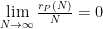 , if polynomials
  denote random graph with n vertices, such that every possible edge is included independently with probability p.
  , there is no sequence of intervals of length
  which contain
  with high probability.
 for constant d, then, with probability that tends to 1 as
  is either
  or
or  , where
  . The Theorem states that if
  is a constant, then
  of complex numbers, absolute value
  of complex number z, polynomials in complex variable, root of a polynomial, derivative
  of polynomial
  , binomial coefficients
  .
. with complex coefficients
  , its Weil norm is
  , and its (normalised) condition number is
  .
. of degree N such that
  .
. and observed that for polynomials with small
  with probability at least
  , and posed the problem to construct an example of such polynomials explicitly. The Theorem solves this problem. The bound
  , orthonormal coordinate system, smooth (that is, differentiable) function in 2 variables, first and second order partial derivatives, notation
  , directional derivative
  for a vector n, normal vector, Lipschitz function.
 be a Lipschitz domain, that is, a bounded domain with boundary
  such that every
  has a neighbourhood U such that
  is the graph of a Lipschitz function in some orthonormal coordinate system. A bounded, open, connected Lipschitz domain is called a Lip domain if it is given by
  , where
  ,
,  are Lipschitz functions with constant 1. The second Neumann eigenvalue
  is the smallest positive real number such that there exists a not identically zero, smooth function
  that satisfies the equation
  on
on  and the boundary condition
  at the smooth points of
  ). A function u that satisfies these conditions is called the second Neumann eigenfunction for
  for the image of set
  under linear transformation defined by matrix
  , notation
  for direct product of sets, notation “
 ” for the real number
  such that
  is an integer, notation
  for the probability, selection uniformly at random.
 be an integer,
  ,
,  , and
, and  be set of vectors
  with
with  for every
  . Let
. Let  be the set of vectors
  such that
  for every
  are fixed such that
  for every
  , let
, let  be the set of vectors
  such that
  for every
  , let
, let  be the set of
  matrices with determinant
  and real entries
  , such that
  for all
  for all
  . Let
. Let  . For
. For  and integer
  be the number of integers
  such that
  , and let
  .
. is selected in
  uniformly at random, then, for all real
  ,
,  , where
  is a constant depending only on
  , and
, and  .
. , it is known that sequence
  (called the Kronecker sequence) is uniformly distributed on
  , and the same is true for shifted sequence
  . More formally, if
  is the number of terms of this sequence (with
  ) belonging to some interval
  , then
  . Quantity
  measures how fast this convergence happens. In 1962, Kesten established the limiting distribution of
  , after appropriate scaling, provided that
  and
and  , where
  for all
  .
. such that, for all
  ,
, for all
  with
with  .
. for the emply set,
  for the number of elements in finite set X (also called the cardinality of X),
  for the set of all subsets of X,
  for the set
  .
. , where X is a finite set and
  is a family of its subsets, such that (i)
  ; (ii) if
  and
and  then
then  ; and (iii) if
  , and
, and  , then there exists
  such that
  . Let
. Let  be the number of sets
  .
. .
. , (ii)
  , and (iii)
  Theorems of the 21st century