You need to know: Polynomial, degree of a polynomial, notation for the set of polynomials in 1 variable with integer coefficients, notation for the set .
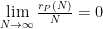
Background: Let be a finite set of polynomials . For integer , let be the size of the largest subset of containing no subset of the form with .
The Theorem: On 1st September 2019, Sarah Peluse submitted to arxiv a paper in which she proved that if all polynomials in have distinct degrees and zero constant terms, then there exists a constant depending on such that .
Short context: Let be the cardinality of the largest subset of which contains no nontrivial k-term arithmetic progressions. Famous Szemerédi’s theorem states that . In 2000, Gowers proved an explicit bound for some constant . In 1996, Bergelson and Leibman extended Szemerédi’s theorem to polynomial progressions and proved that , if polynomials all have zero constant terms. The Theorem establishes an explicit upper bound on , provided that all polynomials have distinct degrees.
Links: Free arxiv version of the original paper is here, journal version is here.
![{\mathbb Z}[y]](https://s0.wp.com/latex.php?latex=%7B%5Cmathbb+Z%7D%5By%5D&bg=ffffff&fg=000000&s=0&c=20201002)
![[N]](https://s0.wp.com/latex.php?latex=%5BN%5D&bg=ffffff&fg=000000&s=0&c=20201002)


![P_i \in {\mathbb Z}[y]](https://s0.wp.com/latex.php?latex=P_i+%5Cin+%7B%5Cmathbb+Z%7D%5By%5D&bg=ffffff&fg=000000&s=0&c=20201002)






 Theorems of the 21st century