You need to know: Group, set of generators, finitely generated group, basic probability theory, independent identically distributed (i.i.d.) random variables.
Background: Let 


![\mu:G\to[0,1]](https://s0.wp.com/latex.php?latex=%5Cmu%3AG%5Cto%5B0%2C1%5D&bg=ffffff&fg=000000&s=0&c=20201002)

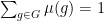


![{\mathbb P}[X_i=g]=\mu(g)](https://s0.wp.com/latex.php?latex=%7B%5Cmathbb+P%7D%5BX_i%3Dg%5D%3D%5Cmu%28g%29&bg=ffffff&fg=000000&s=0&c=20201002)


![L_\mu(n) = {\mathbb E}[|W_n|] = \sum_{g\in G}|g|{\mathbb P}[W_n=g]](https://s0.wp.com/latex.php?latex=L_%5Cmu%28n%29+%3D+%7B%5Cmathbb+E%7D%5B%7CW_n%7C%5D+%3D+%5Csum_%7Bg%5Cin+G%7D%7Cg%7C%7B%5Cmathbb+P%7D%5BW_n%3Dg%5D&bg=ffffff&fg=000000&s=0&c=20201002)
![H_\mu(n) = - \sum_{g\in G}{\mathbb P}[W_n=g]\log{\mathbb P}[W_n=g]](https://s0.wp.com/latex.php?latex=H_%5Cmu%28n%29+%3D+-+%5Csum_%7Bg%5Cin+G%7D%7B%5Cmathbb+P%7D%5BW_n%3Dg%5D%5Clog%7B%5Cmathbb+P%7D%5BW_n%3Dg%5D&bg=ffffff&fg=000000&s=0&c=20201002)


The Theorem: On 27th October 2015, Jérémie Brieussel and Tianyi Zheng submitted to arxiv a paper in which they proved that for any ![\gamma\in[1/2,1]](https://s0.wp.com/latex.php?latex=%5Cgamma%5Cin%5B1%2F2%2C1%5D&bg=ffffff&fg=000000&s=0&c=20201002)
![\theta\in[1/2,1]](https://s0.wp.com/latex.php?latex=%5Ctheta%5Cin%5B1%2F2%2C1%5D&bg=ffffff&fg=000000&s=0&c=20201002)


Short context: The main research directions in studying random walks on groups are (i) given a group, establish properties of random walk on it, and, conversely (ii) given properties of a random walk, find if there exists a group with such random walk. The Theorem contributes to direction (ii). It confirms a conjecture of Amir who proved the same result for ![\gamma,\theta\in[3/4,1]](https://s0.wp.com/latex.php?latex=%5Cgamma%2C%5Ctheta%5Cin%5B3%2F4%2C1%5D&bg=ffffff&fg=000000&s=0&c=20201002)
Links: Free arxiv version of the original paper is here, journal version is here.

 Theorems of the 21st century