You need to know: Euclidean plane  , notation
  for the translation of set
  by a vector
  , open subset of , countable union, countable intersection, and set difference (
 ) of sets. You also need to know what is the Axiom of choice to fully understand the context.
Background: A subset is a Borel set if it can be formed from open sets through the operations of countable union, countable intersection, and set difference. We call two sets  equidecomposable by translations if there are partitions
  and
and  , such that
  ,
,  , for some vectors
  . If, moreover, all
  (and thus
  ) are Borel sets, we say that A and B are equidecomposable by translations with Borel parts.
The Theorem: On 17th December 2016, Andrew Marks and Spencer Unger submitted to arxiv a paper in which they proved that a circle and a square of the same area on the plane are equidecomposable by translations with Borel parts.
Short context: In 1990, Laczkovich, answering a 1925 question of Tarski, proved that circle and a square of the same area are equidecomposable by translations. In a paper submitted in 2015, Grabowski, Máthé, and Pikhurko proved that this is possible even using only Lebesgue measurable pieces (that is, those having a well-define area). However, both results use axiom of choice and the resulting pieces are impossible to construct explicitly. The Theorem states that the circle can be squared with only Borel pieces. The proof does not use the axiom of choice. If such a proof is possible, we say that a problem has a constructive solution.
Links: Free arxiv version of the original paper is here, journal version is here.
Go to the list of all theorems
 such that every vertex has degree at most C), path connecting 2 vertices, length of a path, notation
  for the length of the shortest path connecting vertices
  and
and  in graph G.
 we define a conductance
  such that
  and also
  unless x and y are connected by edge. The graph G together with the conductances
  is denoted
  and called a weighted graph. For
  , let
, let  . For
. For  , let
, let  . A function
  is called harmonic on A if
  for all
  . For
. For  , let
, let  be the set of
  with
with  . We say that the elliptic Harnack inequality holds for
  such that whenever
  ,
,  , and h is non-negative and harmonic in
  , then
  for all
  . We say that weighed graphs
  with vertex sets
  and
and  are roughly isometric if there is a function
  and constants
  and
and  such that (i) for every
  there exists
  , such that
  , (ii)
  for all
  , and (iii)
  for all
  of rational numbers, closed subset of
 ![[0,1]](https://s0.wp.com/latex.php?latex=%5B0%2C1%5D&bg=ffffff&fg=000000&s=0&c=20201002) , multiplication of a set by a constant
, multiplication of a set by a constant  , sum of two sets
  , Hausdorff dimension
  of set
 ![A \subset [0,1]](https://s0.wp.com/latex.php?latex=A+%5Csubset+%5B0%2C1%5D&bg=ffffff&fg=000000&s=0&c=20201002) .
. be the largest integer not exceeding x, and let
  . For integer m, let
  be a function given by
  . We say that set
 ![S \subset [0,1]](https://s0.wp.com/latex.php?latex=S+%5Csubset+%5B0%2C1%5D&bg=ffffff&fg=000000&s=0&c=20201002) is invariant under
is invariant under  if
if  for every
  .
. be positive integers such that
  . Let
. Let ![A; B \subseteq [0,1]](https://s0.wp.com/latex.php?latex=A%3B+B+%5Csubseteq+%5B0%2C1%5D&bg=ffffff&fg=000000&s=0&c=20201002) be closed sets which are invariant under
be closed sets which are invariant under  and
and  , respectively. Then for all real numbers
  and
and  ,
,  .
. and
and  of the Theorem. On 26th September 2016, Meng Wu submitted to arxiv a paper with independent and different proof of the same result. Also, see
  , origin
  in
in  of
of  , unit ball
  , open subset V of
  for second-order partial derivatives.
 is called harmonic if
  for every
  is
is  . For
. For  , a
, a  -cover of set
  is a sequence of sets
  of diameters
  for all i such that
  . For
. For  , let
, let  , where the infimum is taken over all
  is called the d-dimensional Hausdorff measure of S.
 , there exists a constant
  , depending only on n, such that inequality
  holds for every harmonic function
  such that
  .
. is (up to a constant factor) just the usual
  -dimensional volume, e.g.
  is the area. The Theorem confirms a conjecture of Nadirashvili made in 1997. In particular, it implies that the zero set of any non-constant harmonic function
  has an infinite area Also, the Theorem is an important step towards proving a more general conjecture of Yau, which predicts a similar result on n-dimensional curved spaces (called “
 -smooth Riemannian manifolds”) in place of
  of positive integers
 into a finite number r of disjoint subsets
  . We say that set
  is monochromatic if
  for some i.
 such that the set
  is monochromatic.
 in s variables
  with integer coefficients is called a Ramsey family if for any finite colouring of
  such that the set
  is monochromatic. A classical problem asks to develop necessary and sufficient conditions on the polynomials
  is Ramsey. The Theorem establishes this, even for a lager family
  for the set of complex numbers,
  for the absolute value of complex number z,
  ,
,  ,
,  for the unit ball in
  ,
,  for
for  ,
,  , where
  ,
,  , and
, and  .
. with
with  into correspondence a function
  given for every
  by
by  .
. and let
  if n odd and
  if n is even. Then there exists a constant
  such that
  for every f.
 and
and  admit a bi-Lipschitz embedding (or just “embeds” for short) into metric space
  if there exist constants
  and a function
  such that
  . For
. For ![\theta\in(0,1]](https://s0.wp.com/latex.php?latex=%5Ctheta%5Cin%280%2C1%5D&bg=ffffff&fg=000000&s=0&c=20201002) , a
, a  -snowflake of metric space
  . By
. By  space we mean, for concreteness, space of functions
 ![f:[0,1]\to{\mathbb R}](https://s0.wp.com/latex.php?latex=f%3A%5B0%2C1%5D%5Cto%7B%5Cmathbb+R%7D&bg=ffffff&fg=000000&s=0&c=20201002) with norm
with norm  .
. , the maximal
  admits a bi-Lipschitz embedding into
  is equal to
  .
. denotes the maximal
  . Quantifying by “how much”
  is bounded away from 1 gives an important quantitative refinement of non-embeddability
  . In a
  and conjectured that
  . The Theorem confirms this conjecture.
 .
. . Quantifying by “how much”
  for any explicit function
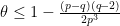
  has been known. The Theorem provides the first such estimate. In fact, the authors conjectured that the inequality in the Theorem can be improved to
  , which would be the best possible. In a
  . For any point
  (called a light source), consider a light ray starting from x and moving inside P, with the usual rule that the angle of incidence equals the angle of reflection. A point
  there are at most finitely many points
  which are not illuminated from light source x.
 Theorems of the 21st century