You need to know: Basic topology, homeomorphism, topological surface, orientable surface, genus of a surface, 
Background: A (two-dimensional, orientable) triangulation 


Let 
![\lambda\in(0,\lambda_c]](https://s0.wp.com/latex.php?latex=%5Clambda%5Cin%280%2C%5Clambda_c%5D&bg=ffffff&fg=000000&s=0&c=20201002)
![h\in (0,\frac{1}{4}]](https://s0.wp.com/latex.php?latex=h%5Cin+%280%2C%5Cfrac%7B1%7D%7B4%7D%5D&bg=ffffff&fg=000000&s=0&c=20201002)

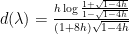



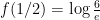
The Theorem: On 1st February 2019, Thomas Budzinski and Baptiste Louf submitted to arxiv a paper in which that proved that for any sequence 

![\lim_{n\to\infty}\frac{g_n}{n}=\theta \in [0,\frac{1}{2}]](https://s0.wp.com/latex.php?latex=%5Clim_%7Bn%5Cto%5Cinfty%7D%5Cfrac%7Bg_n%7D%7Bn%7D%3D%5Ctheta+%5Cin+%5B0%2C%5Cfrac%7B1%7D%7B2%7D%5D&bg=ffffff&fg=000000&s=0&c=20201002)

Short context: Triangulations are important in many applications, for example, as finite representations of a surface to a computer, or in the theory of random surfaces. In the last application, it is important to understand how a uniformly random triangulation looks like, and, for this, we need to count triangulations with various properties. In 1986, Bender and Canfield established the asymptotic growth of 

Links: Free arxiv version of the original paper is here, journal version is here.
 denote random graph with n vertices, such that every possible edge is included independently with probability p.
  , there is no sequence of intervals of length
  which contain
  with high probability.
 for constant d, then, with probability that tends to 1 as
  is either
  or
or  , where
  . The Theorem states that if
  is a constant, then
  for the emply set,
  for the number of elements in finite set X (also called the cardinality of X),
  for the set of all subsets of X,
  for the set
  .
. , where X is a finite set and
  is a family of its subsets, such that (i)
  ; (ii) if
  and
and  then
then  ; and (iii) if
  , and
, and  , then there exists
  such that
  . Let
. Let  be the number of sets
  .
. .
. , (ii)
  , and (iii)
  be the number of proper colourings of graph G. Also, let
  denote the number of vertices of G. Finally, let
  denote the complete bipartite graph on
  vertices.
 .
. is called the normalised number of q-colourings of G. This normalisation is a natural choice, because replacing G by a disjoint union of copies of itself does not change the quantity
  for the maximum degree of graph H. In addition, you may want to go the original paper (or online) and learn what is the Sensitivity Conjecture to fully appreciate the context.
 , whose vertex set consists of vectors
  such that each
  is either
  or
or  , and two vectors are adjacent if they differ in exactly one coordinate.
 , and every
  -vertex induced subgraph H of
  .
. and edge set
  of graph G, notation
  for the set of pairs
  where
where  and
and  , chromatic number
  of graph G.
 of finite simple graphs G and H is the graph with vertex set
  , such that pairs
  and
and  are adjacent if and only if
  and
and  .
. .
. for all graphs G,H. The classical conjecture of Hedetniemi, made in 1966, predicted that the equality holds for all G and H. The conjecture attracted a lot of attention, and has been proved in a number of special cases. The Theorem, however, states that in general this conjecture is false.
 of positive integers, graph, clique in a graph, triangle (3-vertex clique).
 and
and  be integers. Let
  be the minimum number of triangles a graph with n verities and e edges can have. We have an upper bound
  , called “the h*-bound”, where
  is the explicit function.
 , we can write
  for integers
  and
and  . Define
  . Let
. Let  be the unique positive integer with
  . Let
. Let  be the unique integer vector
 and (ii)
  and
and  . Then let
  , and finally
  .
. , there exists
  such that for all positive
 and
and  , we have that
  .
. , every graph on n vertices with more than
  edges contains a clique of size r. A natural question arises to estimate the minimum number
  of r-cliques a graph with n vertices and e edges must contain. In 2016, Reiher
  , n large, and
  .
. for the number of elements in finite set S, limit superior
  .
. be any set of natural numbers. We say that A has positive upper density if
  . The sum of sets
  and
and  is
is  .
. , where B and C are infinite subsets of
  for the number of elements in finite set A, small o notation.
 be the set
  with addition defined modulo 3. Let
  be the set of n-component vectors
  with each
  , and with addition defined component-wise. We say that three different points
  form a line if
  . A set
  is called a cap set if it contains no lines.
 is a cap set, then
  .
. such that
  for every cap set
  . Before 2016, the best upper bound was
  , see
, see  Theorems of the 21st century