You need to know: Graph, infinite graph, connected graphs, connected components of a graph, degree of a vertex in a graph, basic probability theory, almost sure convergence, infimum, notation |A| for the number of elements in any finite set A.
Background: Let  be an infinite graph. Graph
  is called locally finite if every vertex
  has finite degree. An automorphism of graph is a bijection
  , such that pair of vertices
  is an edge if and only if
  is an edge. For vertices
  , let us write
  if there is an automorphism
  such that
  . An (infinite) graph G is called quasi-transitive if its vertex set V can be partitioned into finitely many classes
  , such that if and only if vertices u and v belong to the same class
  . Let
. Let  be the set of vertices
  such that there is an automorphism such that
  and
and  . A graph G is called unimodular if
  whenever , and nonunimodular otherwise.
Let ![p\in[0,1]](https://s0.wp.com/latex.php?latex=p%5Cin%5B0%2C1%5D&bg=ffffff&fg=000000&s=0&c=20201002) . The Bernoulli(p) bond percolation on is a subgraph of G to which each edge of G is included independently with probability p. For given G, let
. The Bernoulli(p) bond percolation on is a subgraph of G to which each edge of G is included independently with probability p. For given G, let  be the infimum of all such that the Bernoulli(p) bond percolation on G has an infinite connected component almost surely, and let
  be the infimum of all p for which this infinite connected component is unique almost surely.
The Theorem: On 7th November 2017, Tom Hutchcroft submitted to the Journal of the AMS a paper in which he proved, among other results, that for any connected, locally finite, quasi-transitive, nonunimodular graph G, we have  .
.
Short context: Inequality implies the existence of non-empty range of parameters  such that Bernoulli(p) bond percolation on G has many infinite connected components. Characterisation of graphs with this property is a well-known important open problem. In 1996, Benjamini and Schramm conjectured that a connected, locally finite, quasi-transitive graph has if and inly if it is nonamenable, see here for the definition. In fact, Gandolfi, Keane, and Newman proved the “only if” part in 1992, so only the “if” part remains open. The proof of this theorem can be extended to quasi-transitive graphs, and this implies the Benjamini-Schramm conjecture for planar graphs. The Theorem confirms the conjecture for nonunimodular graphs.
Links: Free arxiv version of the original paper is here, journal version is here.
Go to the list of all theorems


![\mu:G\to[0,1]](https://s0.wp.com/latex.php?latex=%5Cmu%3AG%5Cto%5B0%2C1%5D&bg=ffffff&fg=000000&s=0&c=20201002)

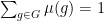


![{\mathbb P}[X_i=g]=\mu(g)](https://s0.wp.com/latex.php?latex=%7B%5Cmathbb+P%7D%5BX_i%3Dg%5D%3D%5Cmu%28g%29&bg=ffffff&fg=000000&s=0&c=20201002)


![L_\mu(n) = {\mathbb E}[|W_n|] = \sum_{g\in G}|g|{\mathbb P}[W_n=g]](https://s0.wp.com/latex.php?latex=L_%5Cmu%28n%29+%3D+%7B%5Cmathbb+E%7D%5B%7CW_n%7C%5D+%3D+%5Csum_%7Bg%5Cin+G%7D%7Cg%7C%7B%5Cmathbb+P%7D%5BW_n%3Dg%5D&bg=ffffff&fg=000000&s=0&c=20201002)
![H_\mu(n) = - \sum_{g\in G}{\mathbb P}[W_n=g]\log{\mathbb P}[W_n=g]](https://s0.wp.com/latex.php?latex=H_%5Cmu%28n%29+%3D+-+%5Csum_%7Bg%5Cin+G%7D%7B%5Cmathbb+P%7D%5BW_n%3Dg%5D%5Clog%7B%5Cmathbb+P%7D%5BW_n%3Dg%5D&bg=ffffff&fg=000000&s=0&c=20201002)


![\gamma\in[1/2,1]](https://s0.wp.com/latex.php?latex=%5Cgamma%5Cin%5B1%2F2%2C1%5D&bg=ffffff&fg=000000&s=0&c=20201002)
![\theta\in[1/2,1]](https://s0.wp.com/latex.php?latex=%5Ctheta%5Cin%5B1%2F2%2C1%5D&bg=ffffff&fg=000000&s=0&c=20201002)


![\gamma,\theta\in[3/4,1]](https://s0.wp.com/latex.php?latex=%5Cgamma%2C%5Ctheta%5Cin%5B3%2F4%2C1%5D&bg=ffffff&fg=000000&s=0&c=20201002)
 denote random graph with n vertices, such that every possible edge is included independently with probability p.
  , there is no sequence of intervals of length
  which contain
  with high probability.
 for constant d, then, with probability that tends to 1 as
  , the chromatic number of
  is either
  or
or  , where
  . The Theorem states that if
  is a constant, then
  of square matrix M, singular square matrix (matrix with determinant
  ), basic probability theory, independent and identically distributed (i.i.d.) random variables,
  notation.
 be a random
  matrix whose entries are i.i.d. Bernoulli random variables (each entry is equal to
  or
or  with probabilities
  ). Let
  be the probability that
  as
as  has attracted considerable attention in literature. There is an obvious lower bound
  , and it has been conjectured by many authors that equality holds. For an upper bound, Komlós proved in 1967 that
  . In 1995, Kahn, Komlós, and Szemerédi proved that
  . This was later improved by Tao and Vu to
  and then to
  , see
, see  . Finally, the Theorem establishes the upper bound
  , which matches the lower bound up to
  , Bernoulli convolution
  is the distribution of the real random variable
  , where the signs are chosen i.i.d. with equal probabilities. It is known that the limit
 ![\lim\limits_{r\to 0+}\frac{\log \nu_\lambda([x-r,x+r])}{\log r}](https://s0.wp.com/latex.php?latex=%5Clim%5Climits_%7Br%5Cto+0%2B%7D%5Cfrac%7B%5Clog+%5Cnu_%5Clambda%28%5Bx-r%2Cx%2Br%5D%29%7D%7B%5Clog+r%7D&bg=ffffff&fg=000000&s=0&c=20201002) exists and is constant for
exists and is constant for  . A real number
  is called algebraic if it is a root of a non-zero polynomial equation with rational coefficients, and is called transcendental otherwise.
 for all transcendental
  .
. the resulting probability measure
  has Lebesgue measure
 ![[n]=\{1,2,\dots,n\}](https://s0.wp.com/latex.php?latex=%5Bn%5D%3D%5C%7B1%2C2%2C%5Cdots%2Cn%5C%7D&bg=ffffff&fg=000000&s=0&c=20201002) , and let
, and let  be the set of vectors
  with each
  being either
  . Assume that we select each
  with some probability
  , such that
  . For
. For  , define
 ![{\mathbb P}[A]=\sum\limits_{w\in A}{\mathbb P}(w)](https://s0.wp.com/latex.php?latex=%7B%5Cmathbb+P%7D%5BA%5D%3D%5Csum%5Climits_%7Bw%5Cin+A%7D%7B%5Cmathbb+P%7D%28w%29&bg=ffffff&fg=000000&s=0&c=20201002) . For any function
. For any function  , define expectation
  and variance
  . For
. For  , let
, let  . A function
  is called increasing if
  whenever
  coordinate-wise. A probability
  is monotonic if for any
 ![i\in[n]](https://s0.wp.com/latex.php?latex=i%5Cin%5Bn%5D&bg=ffffff&fg=000000&s=0&c=20201002) , any
, any ![F\subset [n]](https://s0.wp.com/latex.php?latex=F%5Csubset+%5Bn%5D&bg=ffffff&fg=000000&s=0&c=20201002) , and any
, and any  satisfying
  ,
, ![{\mathbb P}[w_j=x_j, \, \forall j \in F]>0](https://s0.wp.com/latex.php?latex=%7B%5Cmathbb+P%7D%5Bw_j%3Dx_j%2C+%5C%2C+%5Cforall+j+%5Cin+F%5D%3E0&bg=ffffff&fg=000000&s=0&c=20201002) and
and ![{\mathbb P}[w_j=y_j, \, \forall j \in F]>0](https://s0.wp.com/latex.php?latex=%7B%5Cmathbb+P%7D%5Bw_j%3Dy_j%2C+%5C%2C+%5Cforall+j+%5Cin+F%5D%3E0&bg=ffffff&fg=000000&s=0&c=20201002) , we have
, we have ![{\mathbb P}[w_i=1 | w_j=x_j, \, \forall j \in F] \leq {\mathbb P}[w_i=1 | w_j=y_j, \, \forall j \in F]](https://s0.wp.com/latex.php?latex=%7B%5Cmathbb+P%7D%5Bw_i%3D1+%7C+w_j%3Dx_j%2C+%5C%2C+%5Cforall+j+%5Cin+F%5D+%5Cleq+%7B%5Cmathbb+P%7D%5Bw_i%3D1+%7C+w_j%3Dy_j%2C+%5C%2C+%5Cforall+j+%5Cin+F%5D&bg=ffffff&fg=000000&s=0&c=20201002) .
. by querying the values of
  . The algorithm stops when it can determine
  from the bits it has. Let
  be the probability that T, starting from random input
  , queries bit
 ![f:X\to[0,1]](https://s0.wp.com/latex.php?latex=f%3AX%5Cto%5B0%2C1%5D&bg=ffffff&fg=000000&s=0&c=20201002) , any monotonic probability
, any monotonic probability  .
. to depend on each other, and instead imposes much weaker condition that the probability
  for probability, random variable, distribution of a random variable, independent identically distributed (i.i.d.) random variables, polynomial, degree of a polynomial, monic polynomial. You also need Lebesgue measure and Hausdorff dimension to understand the context.
 be real numbers, and let
  be a sequence of i.i.d. random variables with
  and
and  for all n. By
  .
.  is called absolutely continuous if there exists function
  such that
  whenever
  . The Mahler measure of any polynomial
  is
is  . A real number
  is called algebraic if
  for some polynomial P with rational coefficients. The (unique) monic polynomial
  of smallest degree with this property is called the minimal polynomial of r. The Mahler measure of r is
  .
. and
and  , there is a constant
  such that for any algebraic number
  , the Bernoulli convolution
  the
the  is not absolutely continuous for
  , and also for
  for some non-empty set
  . However,
  . The Theorem (with explicit
  ) provides a lot of such examples. For example, it implies that
  and
and  .
.  , supremum
  , limit superior
  .
. , where
  is the minimal number of intervals of length
  .
. has packing dimension
  , origin in
  of a matrix A, inverse
  of a matrix A with
  , symmetric matrix, transpose
  of matrix A.
 matrix
  is called positive definite, if
  for all non-zero
  . Given a positive definite
  be a function given by
  ,
,  . For a subset
  , let
, let  .
.  holds for all convex and centrally symmetric sets
  .
. for the set of integers, basic probability theory, independence, random variable, stochastic process, almost surely.
 is k-dependent if the random sequences
  and
and  are independent of each other, for each
  . We call a stochastic process
  takes values in
  , and almost surely we have
  for all
  .
. and
and  . The Theorem gives a complete answer to this question.
 Theorems of the 21st century