You need to know: Basic probability theory, notation  for probability, random variable, distribution of a random variable, independent identically distributed (i.i.d.) random variables, polynomial, degree of a polynomial, monic polynomial. You also need Lebesgue measure and Hausdorff dimension to understand the context.
Background: Let  be real numbers, and let
  be a sequence of i.i.d. random variables with
  and
and  for all n. By Bernoulli convolution we mean the random variable
  .
.  is called absolutely continuous if there exists function
  such that
  whenever
  . The Mahler measure of any polynomial
  is
is  . A real number
  is called algebraic if
  for some polynomial P with rational coefficients. The (unique) monic polynomial
  of smallest degree with this property is called the minimal polynomial of r. The Mahler measure of r is
  .
.
The Theorem: On 31st January 2016, Péter Varjú submitted to arxiv a paper in which he proved that for every  and
and  , there is a constant
  such that for any algebraic number
  satisfying
  , the Bernoulli convolution is absolutely continuous.
Short context: Bernoulli convolutions has been introduced by Jessen and Wintner in 1935, and studied by Erdős and many others since that. The main research question is for which values of and  the Bernoulli convolution is absolutely continuous. In 1939, Erdős noticed that
  is not absolutely continuous for
  , and also for
  for some non-empty set
  . However, Solomyak proved in 1995 that set E has Lebesgue measure
  . Moreover, Shmerkin, building on this theorem, proved in 2014 that E has Hausdorff dimension . Despite on this, it was known very few explicit examples of -s for which is absolutely continuous, and none such examples was known for
  . The Theorem (with explicit
  ) provides a lot of such examples. For example, it implies that is absolutely continuous for
  and
and  .
.
Links: Free arxiv version of the original paper is here, journal version is here.
Go to the list of all theorems


![{\mathbb Z}[m_1, \dots, m_r]](https://s0.wp.com/latex.php?latex=%7B%5Cmathbb+Z%7D%5Bm_1%2C+%5Cdots%2C+m_r%5D&bg=ffffff&fg=000000&s=0&c=20201002)

![P_1,\dots ,P_k \in {\mathbb Z}[m_1, \dots, m_r]](https://s0.wp.com/latex.php?latex=P_1%2C%5Cdots+%2CP_k+%5Cin+%7B%5Cmathbb+Z%7D%5Bm_1%2C+%5Cdots%2C+m_r%5D&bg=ffffff&fg=000000&s=0&c=20201002)


 , norm
  of
of  , open ball ball
  with centre
  and radius
  , origin
  , notation
  for the volume of set
  , limit superior
  , notation
  .
. . If the limit (as opposite to limsup) exists,
  is called the density of S.
 can have upper density greater than
  .
. . Earlier, it was only
  . Earlier in 2016, Viazovska
  . The proof of the Theorem extends Viazovska’s arguments to the case
  of integers, perfect square, o(1) notation.
 ,
,  , and
, and  consider the equation
  . This is called generalized Markoff-Hurwitz equation (the Markoff-Hurwitz equation corresponds to the case
  ). For
  be the number of integer solutions
  to this equation with
  for
for  .
. and
and  are not perfect squares, then either
  or
or  , where
  and
and  are positive constants.
 and
and  , whose solutions in positive integers are known as Markoff triples, and have applications in number theory, group theory, and geometry. The Theorem establishes an asymptotic formula for the number of integer solutions of this equation.
 can have upper density greater than
  .
. -lattice packing) with density
  for the set of complex numbers,
  for the absolute value of complex number z,
  ,
,  ,
,  for the unit ball in
  ,
,  for
for  ,
,  , where
  ,
,  , and
, and  .
. with
with  into correspondence a function
  given for every
  by
by  .
. and let
  if n odd and
  if n is even. Then there exists a constant
  such that
  for every f.
 and
and  for
for  , absolute value
  , limit inferior
  .
. , by
, by  we mean
  .
. , one has
 , supremum
  , limit superior
  , Bernoulli convolution
  is the distribution of the real random variable
  , where the signs are chosen i.i.d. with equal probabilities. It is known that the limit
 ![\lim\limits_{r\to 0+}\frac{\log \nu_\lambda([x-r,x+r])}{\log r}](https://s0.wp.com/latex.php?latex=%5Clim%5Climits_%7Br%5Cto+0%2B%7D%5Cfrac%7B%5Clog+%5Cnu_%5Clambda%28%5Bx-r%2Cx%2Br%5D%29%7D%7B%5Clog+r%7D&bg=ffffff&fg=000000&s=0&c=20201002) exists and is constant for
exists and is constant for  . The box dimension of set
  of real numbers is
  , where
  is the minimal number of intervals of length
  .
. has packing dimension
  outside a set of
  the resulting probability measure
  admit a bi-Lipschitz embedding (or just “embeds” for short) into metric space
  if there exist constants
  and a function
  such that
  . For
. For ![\theta\in(0,1]](https://s0.wp.com/latex.php?latex=%5Ctheta%5Cin%280%2C1%5D&bg=ffffff&fg=000000&s=0&c=20201002) , a
, a  -snowflake of metric space
  . By
. By  space we mean, for concreteness, space of functions
 ![f:[0,1]\to{\mathbb R}](https://s0.wp.com/latex.php?latex=f%3A%5B0%2C1%5D%5Cto%7B%5Cmathbb+R%7D&bg=ffffff&fg=000000&s=0&c=20201002) with norm
with norm  .
. , the maximal
  admits a bi-Lipschitz embedding into
  is equal to
  .
. denotes the maximal
  . Quantifying by “how much”
  is bounded away from 1 gives an important quantitative refinement of non-embeddability
  . In a
  and conjectured that
  . The Theorem confirms this conjecture.
 .
. . Quantifying by “how much”
  for any explicit function
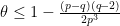
  has been known. The Theorem provides the first such estimate. In fact, the authors conjectured that the inequality in the Theorem can be improved to
  , which would be the best possible. In a
  Theorems of the 21st century